 English
  Mauritius
  French
What is Driver Monitoring and Why It’s Crucial for Road Safety
On 31 Mar, 2026, By
Every day, millions of people take to the roads—commuting to work, running errands, or driving long distances. While we like to think we’re attentive drivers, human error is the leading cause of road accidents worldwide. Fatigue, distraction, and poor decision-making can turn a routine drive into a dangerous situation in seconds.
This is where Driver Monitoring Systems (DMS) and Advanced Driver Assistance Systems (ADAS) come in. These technologies are not just futuristic concepts—they are practical tools designed to make driving safer, smarter, and more reliable. Understanding driver monitoring and its role in modern vehicles can help drivers, fleet operators, and commuters feel more confident on the road.
What is a Driver Monitoring System (DMS)?
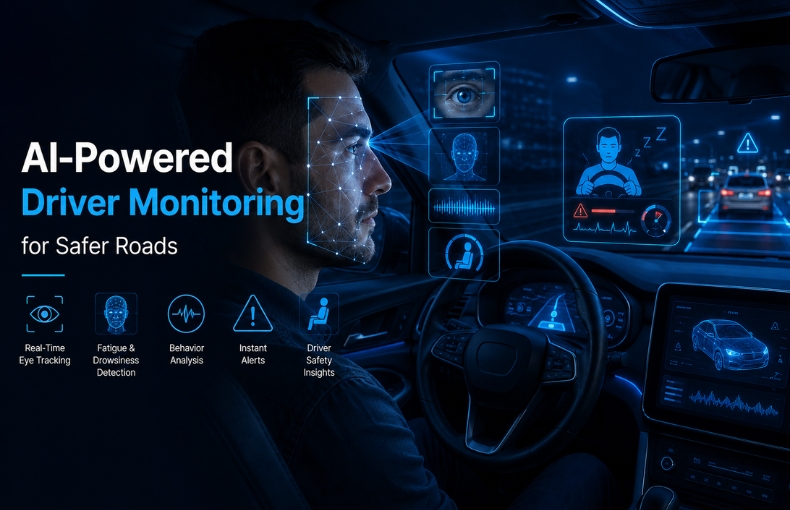
A Driver Monitoring System acts like an extra set of eyes in the car. It continuously observes a driver’s behavior using cameras, sensors, and sometimes biometric recognition. The system tracks facial expressions, eye movement, and head position to detect signs of drowsiness, distraction, or inattentiveness. If a potential risk is detected, DMS can alert the driver in real time through visual, auditory, or haptic feedback.
Real-Time Driver Awareness
Long drives, congested traffic, or late-night commutes can make it easy to zone out behind the wheel. DMS tracks even small changes in attention, like wandering eyes or prolonged distraction, and alerts the driver before a minor lapse becomes dangerous. It acts as a silent co-pilot, helping drivers stay focused when the road demands full attention.
Fatigue Detection
Driver fatigue is a serious, often underestimated risk. DMS monitors behaviors such as yawning, slow blinking, or slouched posture. When fatigue is detected, the system prompts the driver to take a break. For long-haul truck drivers, delivery services, and busy commuters, these timely warnings can prevent accidents caused by tiredness.
Distraction Management
Smartphones, GPS notifications, and conversations with passengers can easily divert attention from the road. DMS identifies when the driver is distracted for extended periods and provides gentle reminders to refocus. Over time, this technology encourages safer driving habits.
Driver Identification
In commercial fleets, multiple drivers may share a single vehicle. Advanced DMS systems can use biometric identification to ensure only authorized drivers operate a vehicle. This simplifies fleet management, provides accountability, and allows safety monitoring tailored to individual driver behavior.
How Advanced Driver Assistance Systems (ADAS) Help
While DMS keeps drivers alert, ADAS assists them in making safe driving decisions. Together, these systems create a comprehensive safety net that addresses both human error and road hazards.
Lane Departure and Lane-Keeping
Unintentionally drifting out of a lane is a common cause of accidents, especially on highways. ADAS detects lane markings and warns drivers if they drift, or gently corrects the steering to keep the vehicle on track. This is particularly valuable for long trips and high-speed roads.
Collision Avoidance
Sudden stops, pedestrians crossing, or vehicles merging unexpectedly are everyday hazards. ADAS uses sensors to detect potential collisions and can even apply emergency braking automatically, helping prevent accidents before they happen.
Adaptive Cruise Control
Driving in stop-and-go traffic or on long highway stretches can be exhausting. Adaptive Cruise Control automatically adjusts speed to maintain a safe distance from the car ahead, reducing driver fatigue and stress while ensuring safer driving.
Blind Spot Detection
Changing lanes in busy traffic is risky, particularly when vehicles hide in blind spots. ADAS alerts the driver whenever another vehicle is in a hidden area, enabling safer lane changes and merges.
Traffic Sign Recognition
Road signs are easy to miss, especially in unfamiliar areas. ADAS recognizes important traffic signs like speed limits, stop signs, and no-entry zones, helping drivers comply with rules without constant scanning.
Benefits of DMS and ADAS in Today’s World
The combination of Driver Monitoring and ADAS technologies delivers tangible benefits for drivers and fleet operators alike:
Reduced Accidents
By alerting drivers to fatigue, distraction, or imminent collisions, DMS and ADAS prevent accidents caused by human error. This is critical in today’s world, where commuting distances are longer and traffic conditions are unpredictable.
Insurance Cost Savings
Vehicles equipped with DMS and ADAS are safer and less likely to be involved in accidents, which often leads to insurance discounts. For individuals and commercial fleets, these savings can be significant over time.
Fleet Efficiency and Safety
For delivery services, logistics companies, and public transportation providers, monitoring driver behavior ensures safer operations and reduces downtime caused by accidents. These systems also allow managers to identify risky driving habits and provide targeted training to improve overall safety.
Compliance and Confidence
Some regions require fleet operators to implement driver monitoring and assistance systems. Beyond regulatory compliance, these systems offer peace of mind—drivers know that even on long or stressful journeys, safety is continuously supported by technology.
How Skylabs Contributes to Safer Roads
In the driver monitoring and ADAS sector, Skylabs provides technology that addresses real-world road safety challenges. Their solutions integrate AI and machine learning to go beyond simple alerts. By analyzing driver behavior, predicting risky situations, and providing actionable insights, Skylabs helps drivers stay aware and responsive in high-risk conditions.
For fleet operators, Skylabs’ technology allows real-time monitoring of drivers, identification of fatigue or distraction, and data-driven insights that improve training and safety management. For individual drivers, the systems act as a vigilant co-pilot, reducing stress and helping prevent accidents.
By combining DMS and ADAS, Skylabs strengthens situational awareness, reduces human error, and supports safer driving habits, making it a key contributor to modern road safety initiatives.
The Future of Road Safety
As autonomous driving becomes more prevalent, AI-powered DMS and ADAS systems will be crucial in bridging human-driven and fully self-driving vehicles. Predictive analytics, proactive safety alerts, and intelligent assistance will redefine how we drive, making roads safer for everyone.
Driver Monitoring Systems (DMS) and Advanced Driver Assistance Systems (ADAS) are no longer optional—they are essential for safer driving. By keeping drivers alert, preventing collisions, and assisting with critical driving tasks, these systems make every journey safer.
Organizations like Skylabs are advancing the sector by providing technologies that combine monitoring, predictive analytics, and driver assistance. In today’s fast-paced, distraction-filled driving environment, these solutions are helping prevent accidents, reduce risk, and save lives—both for individual drivers and commercial fleets.
Investing in driver monitoring and ADAS solutions today means safer roads for everyone tomorrow.